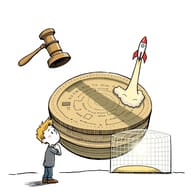
South Korea's Trillion-Dollar Chip Bet Meets a US Price-Fixing Lawsuit
Show notes
South Korea is pushing a trillion-dollar memory chip expansion while Samsung, SK Hynix, and Micron face a US price-fixing suit over alleged DRAM collusion. A federal appeals court ruled that suspicionless geofence warrants violate the Fourth Amendment, raising the bar for law enforcement dragnets. Rocket Lab is buying Iridium's satellite business in a carve-out that turns the launch company into a full-stack communications provider overnight. Developers get a boost from Ornith-1.0, an open-sourc
Timeline
- 00:00:00 Opening
- 00:00:29 South Korea's $1T memory chip bet meets a US price-fixing lawsuit
- 00:02:08 Federal court rules suspicionless geofence warrants unconstitutional
- 00:03:24 Rocket Lab acquires Iridium's satellite communications business
- 00:05:16 Ornith-1.0 and Qwen 3.6 27B: self-correcting coding models for local dev
- 00:07:28 Molecular evidence for two distinct structures in liquid water
- 00:09:05 Digital ownership erodes: PlayStation pulls purchases, Instagram mines photos
- 00:10:48 European ISPs demand rightsholders pay for overblocking collateral damage
- 00:12:09 .self: a new top-level domain designed for self-hosting
- 00:13:17 A native graphical shell brings drag-and-drop file management to SSH
- 00:14:25 Privacy leaders under scrutiny: Tidal, Mullvad, and Google's takedown assist
Related links
- South Korea to spend $1T on more memory chip production and humanoid robots - Bri Hacker News Campaign Feed
- Samsung, SK Hynix, Micron Sued in US over Memory Price Fixing - Bri Hacker News Campaign Feed
- US Supreme Court rules geofence warrants require constitutional protections - Bri Hacker News Campaign Feed
- Rocketlab acquires Iridium - Bri Hacker News Campaign Feed
- Ornith-1.0: self-improving open-source models for agentic coding - Bri Hacker News Campaign Feed
- Qwen 3.6 27B is the sweet spot for local development - Bri Hacker News Campaign Feed
- Scientists find molecular-level evidence for two structures in liquid water - Bri Hacker News Campaign Feed
- Studio Canal Movies purchased on PlayStation Store removed without refund - Bri Hacker News Campaign Feed
- Instagram is incorporating users' photos in ads for Meta Glasses - Bri Hacker News Campaign Feed
- European ISPs Want Rightsholders Held Accountable for Overblocking Damage - Bri Hacker News Campaign Feed
- .self: A new top-level domain designed to support self-hosting - Bri Hacker News Campaign Feed
- A native graphical shell for SSH - Bri Hacker News Campaign Feed
- Tidal AI Policy - Bri Hacker News Campaign Feed
- The CEO of Mullvad is the main financer of the Swedish Örebro party - Bri Hacker News Campaign Feed
- Pollen tried to remove my article and Google is assisting with it - Bri Hacker News Campaign Feed
This episode is produced by Bri. Bri uses advanced AI technology to turn the feeds you care about into podcasts made for listening. Contact us at hi@bri.so.
Transcript
Mia: This is HackerNews Daily, a Bri podcast. I'm Mia, and with me is Milo.
Milo: Today we are tracking three stories: South Korea's trillion-dollar memory chip bet colliding with a US price-fixing lawsuit, a federal court ruling that suspicionless geofence warrants violate the Fourth Amendment, and Rocket Lab acquiring Iridium's satellite business in a deal that is not what it first looks like.
Mia: South Korea just put a trillion-dollar bet on memory chips, and the same companies driving that bet are now facing a US price-fixing lawsuit.
Milo: The link is hard to ignore. The government plan aims to more than double domestic memory output, especially HBM chips for AI, while also funding a billion-dollar humanoid robot initiative.
Mia: The target is 1,700 trillion won by 2047 — roughly a trillion US dollars — and it leans hard on tax breaks and infrastructure near Seoul, with Samsung and SK Hynix at the center.
Milo: And almost simultaneously, a class-action complaint was filed in California accusing Samsung, SK Hynix, and Micron of colluding to keep DRAM prices high from 2020 to early 2025.
Mia: The suit points to synchronized supply cuts and price hikes, which would have hit everything from consumer laptops to cloud server bills.
Milo: If collusion is proven, the supply chain behind that trillion-dollar expansion was already running on artificially inflated margins.
Mia: The alleged scheme also includes US-based Micron, so regulators in Seoul and Washington may both end up scrutinizing the same pricing patterns.
Milo: And South Korea treats chip competitiveness as a national security matter — so a US legal ruling could directly test that industrial strategy.
Mia: The core tension: the same capacity that promises cheaper AI hardware is now being questioned for whether its pricing was ever honest.
Mia: A federal court just ruled that suspicionless digital dragnets violate the Fourth Amendment.
Milo: Wait—does this actually make geofence warrants illegal now?
Mia: The DC Circuit did not ban them outright, but it said demanding every phone's location from Google without any particular suspect is unconstitutional.
Milo: So the problem is not the warrant itself — it is the "give us every device in the area" part.
Mia: Exactly. The court called that a general warrant, like the kind the Founders wrote the Fourth Amendment to stop.
Milo: What does that mean for law enforcement going forward?
Mia: They still have other tools — getting a warrant for a suspect's phone records, asking for cell-tower dumps, or a geofence request that names a target first.
Milo: So the bar is not "never use location data" — it is "you cannot start by sweeping up everyone and then see who looks interesting."
Mia: Right. And because this came from a federal appeals court, the standard now applies in DC and influences cases nationwide.
Milo: That’s a real shift. It means the next time police want to solve a crime by mapping every phone at a protest or a burglary scene, they’ll face a much higher hurdle.
Mia: The M&A action is coming from an unusual direction this time — Rocket Lab is acquiring Iridium, but not the whole company.
Milo: Wait — Rocket Lab, the launch and spacecraft builder, is buying the satellite operator that runs the ninety-five-satellite constellation everyone uses for global voice and data?
Mia: That is the headline, but the structure is very specific and the source makes it clear this is not a traditional takeover.
Milo: So what is actually changing hands, and what stays with Iridium’s shareholders?
Mia: Rocket Lab is acquiring Iridium’s satellite communications business, which includes the constellation, the spectrum licenses, and the ground infrastructure, but Iridium as a corporate entity continues to exist and keeps something else entirely.
Milo: It keeps Iridium’s legacy US government contracts, its debt, and its cash — so this is more of a carve-out than a full buyout.
Mia: Right, and the source frames this as a vertical move that gives Rocket Lab an operational network instead of just launching payloads for other people.
Milo: The concrete consequence for listeners is that a launch company suddenly owns a real-time, pole-to-pole satellite communications service, which could change how quickly new capabilities get integrated into the constellation.
Mia: And because Rocket Lab now controls the space and ground segments end to end, it can iterate on both sides without waiting for a separate commercial operator to approve upgrades.
Milo: That means the satellite network itself can become a continuous product platform, not a one-off infrastructure refresh every decade.
Mia: Exactly — the takeaway is that this deal turns Rocket Lab from a launch and satellite supplier into a full-stack communications provider overnight.
Mia: So Ornith-1.0 just dropped, and it’s trying something wild for open-source coding models: it can self-improve its own outputs.
Milo: What does “self-improve” actually mean here? Is the model rewriting its own code at runtime?
Mia: Not runtime recoding — it works at the prompt level. When the model runs into an error or a failing test, it uses that same error feedback to try a corrected approach.
Milo: That’s a pretty direct loop. Instead of needing a human to debug, it treats the traceback as a repair instruction.
Mia: Right, and the built-in scaffold keeps cycling until tests pass or a turn limit is hit. The paper shows it boosts the base model’s agentic coding score from 27% to 55% on SWE-bench Verified just through self-correction.
Milo: So the model isn’t bigger — it’s just allowed to look at its own mistakes. That makes me think about local setups. Because a 27 billion parameter model running locally could suddenly act a lot smarter if it’s given the same loop.
Mia: That’s exactly why the timing is interesting. There’s also a new take that Qwen 3.6 27B is hitting the sweet spot for local development right now.
Milo: Why 27 billion parameters? Usually the trade-off is between capability and what fits on a single GPU.
Mia: It fits on a 24-gigabyte consumer card with 4-bit quantization, yet it still benchmarks close to much larger models on the aider polyglot coding leaderboard.
Milo: So combine that with Ornith-1.0’s self-correction pattern, and a local rig could start closing the gap with hosted frontier models.
Mia: The paper and the community reports suggest the combination raises the ceiling for what you can run without an internet connection. The trade-off is longer runtime per task, since the loop tries multiple passes.
Milo: Still, if one person with one GPU can iterate until the code works, that rewrites the “local is second class” assumption.
Mia: Water is one of those things that feels completely solved, but at the molecular level, it keeps surprising us.
Milo: Right—and a new study just added a big piece to a long-running argument. Instead of one uniform liquid, researchers found two coexisting molecular structures in water.
Mia: The experiment used an X-ray laser at extremely low temperatures, below minus 40 degrees Celsius, to catch water in a supercooled state just before it froze.
Milo: They tracked how molecules rearranged around a changing hydrogen-bond network. What emerged wasn't a smooth shift—it was a sharp transition between a low-density and a high-density liquid form.
Mia: That matters because it backs a controversial idea called the liquid–liquid critical point: water doesn't simply become denser when cooled; it can flip between two distinct liquid phases under pressure.
Milo: And one striking detail: the two structures differ in how many neighbors a water molecule has. The low-density form averages about four, while the high-density form allows five or more, which changes how easily heat moves through the liquid.
Mia: So what does this actually change for the rest of us?
Milo: It helps explain real-world oddities—why water's density peaks at four degrees Celsius, or how deep ocean currents form. Those behaviors look less mysterious if the liquid itself can switch between two internal architectures.
Milo: You buy a movie, it sits in your library, and then one day it just disappears—without a refund. That happened this week with Studio Canal titles on PlayStation, where users in Germany and Austria were told the content was removed due to licensing changes, and Sony said the funds would not be returned.
Mia: Wait, not a rental glitch? These were outright purchases?
Mia: So the store sells you a permanent license, then pulls the license when its own deal expires, and keeps your money. That’s a pretty stark reminder that you don’t own what’s in your digital library.
Milo: Right, the only thing you actually control is a local file. If it lives on a platform’s server, it can be revoked any time.
Mia: And that same tension showed up in a very different way this week around Meta’s Ray-Ban glasses. Instagram is now pulling users’ photos into ads for those glasses.
Milo: So your vacation shot or your kid’s birthday can end up as a testimonial in a Meta ad—unless you dig into settings and opt out.
Mia: Which most people won’t do, because the toggle is buried. So the platform treats personal photos as marketing inventory by default.
Milo: The common thread is control, or the lack of it, flowing to the platform. With PlayStation, you lose a purchase you thought was yours; with Instagram, your photo becomes ad creative you never agreed to.
Mia: It leaves listeners with a concrete question: next time you “buy” digital media or post a picture, are you really keeping ownership—or just renting access while the platform uses your stuff for free?
Milo: They're saying if rightsholders demand website blocks and those blocks knock out legal content by mistake, the rightsholders should pay for the damage. Right now ISPs carry the risk, and a group of European provider associations published a joint paper arguing the legal framework is backwards.
Mia: Wait — so a court orders a block, a legit site gets caught in the net, and ISPs want the company that asked for the block to cover the cost?
Milo: They point to cases where dynamic IP blocks accidentally took down government portals and small business services. Under the current setup, often nobody cuts the check — the ISP might face regulatory heat, but the rightsholder walks away.
Milo: The providers want mandatory financial liability — you ask for the block, you bear the collateral damage. That's the bet. And if the cost of overblocking lands on the one who demanded it, the whole blocking pipeline gets safer fast.
Mia: That would force rightsholders to double-check their target lists before rushing to enforcement.
Milo: That's the bet. And if the cost of overblocking lands on the one who demanded it, the whole blocking pipeline gets safer fast.
Mia: We've been talking about internet intermediaries and who gets blamed when enforcement goes wrong.
Mia: Now there's a proposal that tries a different lever entirely — a new top-level domain just for self-hosting, called.
Milo: So instead of negotiating with platforms, this would give people their own piece of internet real estate by default.
Milo: What makes structurally different from any other domain — like or?
Mia: The core idea is that domains under would be designed to point to infrastructure you control, not to a platform's servers — the registration process itself would encourage self-hosting setups.
Mia: The group behind it, something called HCCF, frames it as reclaiming your digital presence, tying your domain to a verifiable legal identity so you are the anchor, not a service provider.
Milo: That's a clean story, but there's an immediate tension — if it requires tying your domain to a verified legal identity, it makes pseudonymous or low-profile hosting harder, not easier.
Milo: So the same mechanism that protects your ownership also raises the stakes for anyone who needs to publish without attaching their real name.
Mia: So you’ve probably used SSH in a terminal, but have you ever thought about dragging files in a remote session like it’s just another Finder window?
Milo: Right — and there’s a project on HN that builds a native graphical shell for SSH. It renders remote directories as actual windows, so cut, paste, drag, and drop all work without typing a command.
Mia: Which changes the mental model. Instead of *ssh in* and *remember the path*, you just interact with the remote filesystem visually.
Milo: The network is still SSH underneath, but the UI maps local gestures to remote operations. One trade-off is that it expects fast-ish latency — lag makes drag-and-drop feel broken.
Mia: Does it do filesystem mapping, or is it literally forwarding window-manager calls over SSH?
Milo: It’s forwarding graphical primitives — not full video — so it stays pretty light. The catch is that complex remote apps are still out of scope; it’s built for file management and simple workflows.
Mia: Privacy tools are making headlines, but this time the story is about the people and power behind them, not just the tech.
Milo: Right — three stories are converging into one uncomfortable question: what happens when the platforms and leaders we trust for privacy start acting like the institutions they claim to protect us from.
Mia: Tidal, the music streaming service promising fairer artist payouts, just published its AI policy.
Milo: The core commitment is notable: they will not use artists' music to train generative AI models without explicit permission.
Mia: And they're framing it as a human-art-first stance, but for users there's a sharper line — no AI-generated content is allowed on the platform at all.
Milo: Which sounds clean, until you realize enforcement means Tidal is now the gatekeeper deciding what counts as AI-made versus human-made, a power that could get messy fast.
Mia: Meanwhile, a different kind of power surfaced in Sweden. The CEO of Mullvad VPN is the main financer of the Örebro party.
Milo: That ties a privacy-tool leader directly to political influence, which complicates the usual "trust us, we protect your data" promise with a whole new layer of ideological alignment.
Mia: And then there's Pollen — a membership community — reportedly trying to remove an article critical of its CEO, with Google assisting in the takedown.
Milo: Put together, these threads show a pattern: platforms can protect your content, or they can quietly help suppress it, and the same leaders who champion privacy can also fund political parties without your say.
Mia: From digital purchases that can vanish to privacy leaders whose other roles complicate the promise, the question keeps coming back to who actually holds the power when something goes wrong.
Milo: That's our show for today. I'm Milo, Mia is here too — thanks for listening to HackerNews Daily, from Bri. We'll be back with more soon.